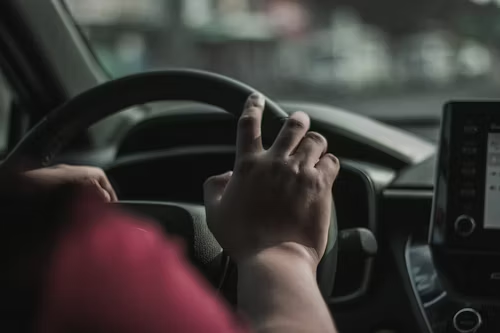
There is a common misconception can a Deaf Person Drive Safely? However, the reality is that deaf and hard-of-hearing individuals are some of the most attentive drivers on the road today.
At CityBizLocal, we believe in breaking down barriers and providing clear, localized information for all members of our community. In this guide, we’ll explore the legalities, safety statistics, and unique adaptations that allow deaf individuals to navigate our roads with confidence.
Is it Legal for a Deaf Person to Drive?
Yes, it is entirely legal for deaf people to drive in all 50 U.S. states. Driving is primarily a visual task, and the law reflects this.
- The Americans with Disabilities Act (ADA): Under the ADA of 1990, it is illegal for state DMVs to deny a driver’s license solely based on a person’s hearing status.
- International Standards: Deaf individuals are also permitted to drive in the vast majority of countries worldwide, with over 140 nations recognizing their right to a license.
- Commercial Licenses: While some additional medical waivers may be required by the Department of Transportation (DOT) for commercial driving, many deaf individuals successfully operate trucks and delivery vehicles professionally.
The Science of Safety: Are Deaf Drivers High-Risk?
Research actually suggests that deaf drivers may be safer than their hearing counterparts in several key areas. Since they cannot rely on auditory cues, they often develop higher levels of visual peripheral awareness.
- Enhanced Focus: Studies indicate that deaf drivers are less likely to be distracted by “auditory clutter” like loud music or complex conversations, allowing them to focus more intensely on the road.
- Safety Records: Insurance companies and traffic safety organizations have found that deaf drivers do not pose a higher risk for accidents compared to hearing drivers.
- Observation: Deaf drivers typically check their mirrors more frequently and remain more visually aware of their surroundings to anticipate potential hazards.
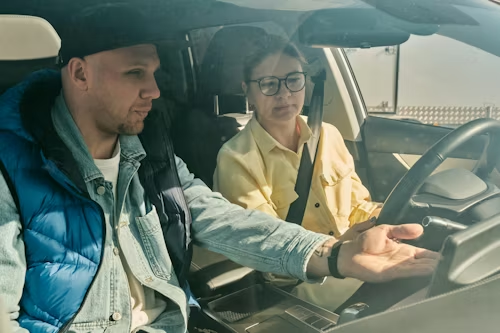
How Deaf Drivers Handle Common Road Challenges?
One of the most frequent questions people ask is: “How do they hear sirens or honking?” The answer lies in a combination of heightened awareness and specialized technology.
1. Emergency Vehicles and Sirens
Deaf drivers often notice the flashing lights of an ambulance or police car long before a hearing driver might notice the siren. Additionally, many use panoramic rearview mirrors that provide a significantly wider field of vision, making it easier to spot emergency vehicles approaching from any angle.
2. Alerting Systems
Modern technology offers several “assistive listening” or “visual alerting” devices for vehicles:
- Visual Indicators: Some cars can be equipped with sensors that flash a light on the dashboard when a high-pitched sound (like a siren or a horn) is detected nearby.
- Tactile Feedback: Advanced safety systems in newer vehicles use seat vibrations to alert drivers to lane departures or nearby objects, which is a perfect fit for the deaf community.
3. GPS and Navigation
Visual-heavy GPS systems have made navigation easier than ever. Most deaf drivers use standard smartphones or dashboard-integrated displays to get turn-by-turn directions without needing voice prompts.
Tips for Interacting with Deaf Drivers
If you are a local business owner or a resident, understanding how to communicate effectively can make our community more inclusive.
- Traffic Stops: If a police officer pulls over a deaf driver, the driver may have a card on their visor or steering column that states they are deaf. Clear hand gestures or writing on a notepad are the most effective ways to communicate.
- Patience is Key: Just like any other driver, a deaf person might need an extra second to process a visual signal at an intersection.
Find Accessible Services on CityBizLocal
Building an inclusive community starts with local support. Whether you are looking for driving schools that offer ASL-friendly instruction or auto shops familiar with installing assistive vehicle technology, CityBizLocal is your go-to directory.
We connect you with local professionals who understand the diverse needs of every driver. By supporting local businesses that prioritize accessibility, we make our streets safer and more welcoming for everyone.